Key Takeaways for Homeowners
- 40% Greater Capacity: 6-inch seamless K-style gutters hold roughly 40% more rainwater volume than standard 5-inch residential gutters.
- Essential for Steep Pitches: Homes with roof slopes of 7/12 or steeper shed water at high velocities that routinely overshoot standard 5-inch troughs.
- Oversized Downspouts Prevent Clogs: Pairing 6-inch gutters with 3x4-inch commercial downspouts dramatically reduces clogs from oak and maple leaves.
- Foundation Protection: Overflowing gutters are the #1 cause of wet basements, cracked masonry foundations, and rotted soffit fascia boards across Somerset County.
- Modest Cost Difference: Upgrading from 5-inch to 6-inch seamless gutters typically adds only $2.50 to $4.50 per linear foot installed.
Water Capacity: The True Difference Between 5-Inch & 6-Inch Gutters
For decades, standard 5-inch K-style aluminum gutters were the default specification on suburban tract developments throughout Central New Jersey. However, climate patterns across Somerset County have shifted dramatically over the past two decades. We now regularly experience severe, high-intensity microburst rainstorms delivering 2.5 to 3.5 inches of precipitation per hour, overwhelming legacy drainage systems and sending thousands of gallons of water cascading against residential foundations.
A standard 5-inch K-style gutter features a 5-inch top opening, a 3.25-inch bottom, and a 3.5-inch back depth, yielding a total water holding capacity of roughly 1.2 gallons per linear foot. In contrast, an oversized 6-inch seamless gutter holds approximately 2.0 gallons per linear foot—a massive 44% to 50% increase in water volume capacity. That extra inch of front lip height and trough depth prevents high-velocity sheet runoff from cresting over the outer rim like a waterfall during peak storm surges.
The Hydraulic Engineering Formula (Q = C × I × A)
Architectural sheet metal engineering standards (SMACNA) calculate required roof drainage volume using the rational runoff equation:
Where Q = Runoff flow rate in gallons per minute (GPM), C = Runoff coefficient (0.90 for asphalt shingles), I = Local rainfall intensity in inches per hour (Central NJ 10-year storm design criteria is 3.2 in/hr), and A = Roof surface area in square feet.
For a common 1,200-square-foot roof slope in Bridgewater, peak storm runoff generates over 35.9 gallons per minute. While a 5-inch trough chokes and overflows within 90 seconds under this volume, a 6-inch seamless trough paired with oversized leaders evacuates flow smoothly without hydrostatic pressure backup.
When 6-Inch Gutters Are Mandatory for New Jersey Homes
While modest ranch homes with short roof runs can sometimes function with 5-inch troughs, specific architectural styles and environmental factors throughout Somerset County make 6-inch systems indispensable:
-
Steep Roof Pitches (7/12 or Greater): Colonial, Victorian, and contemporary homes in Somerville, Basking Ridge, and Martinsville shed water at intense downward velocities that physically ramp over narrow 5-inch gutters.
-
Upper Dormers Draining onto Lower Roofs: Concentrated valley channels discharging water from second-story dormers onto lower garage or porch roofs create torrential localized flow points that overflow standard gutters immediately.
-
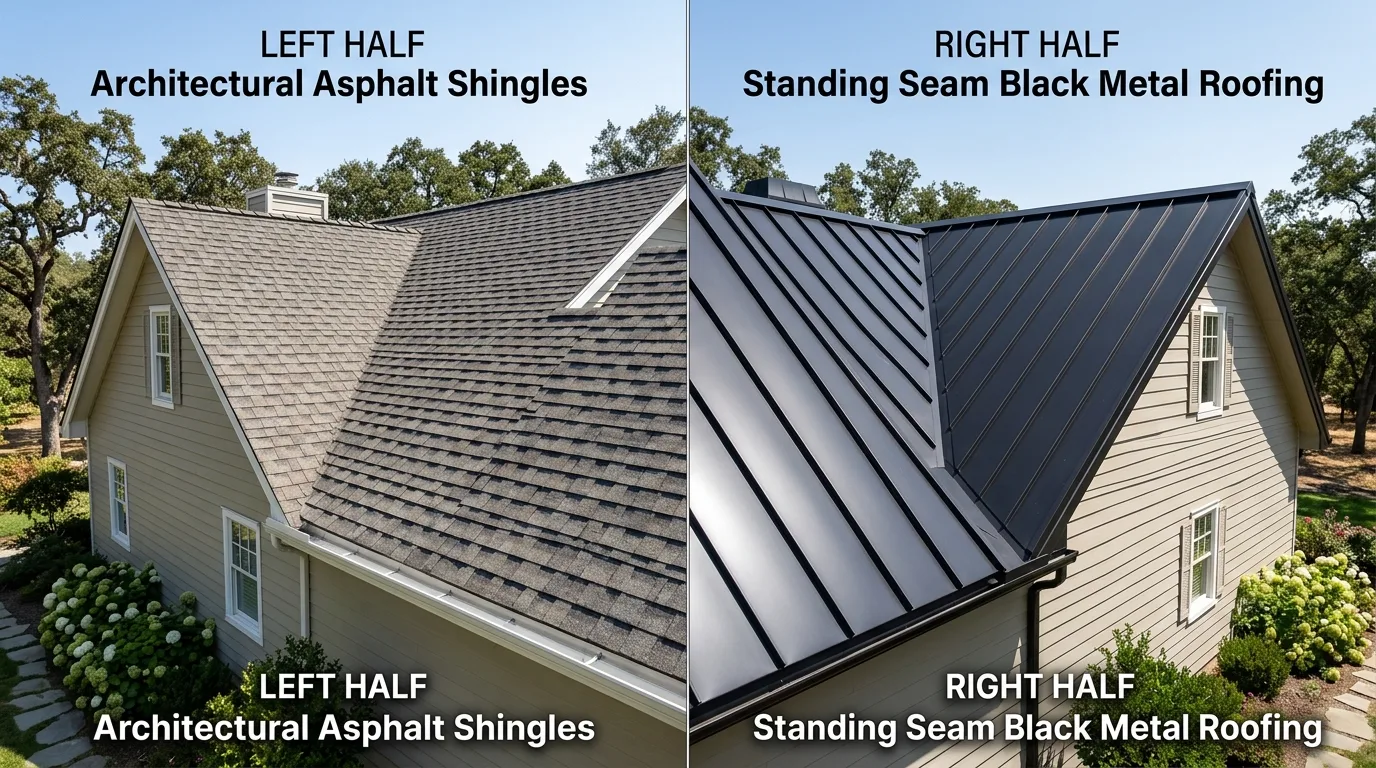
Smooth Metal or Composite Roof Systems: Standing seam metal roofing and synthetic slate offer zero friction resistance compared to granular asphalt shingles, discharging storm surges twice as fast.
-
Long Gutter Spans Over 40 Feet: Extended continuous roof eaves with limited space for downspout placements require maximum cross-sectional trough volume to move water without mid-span stagnation.
Fascia Board & Foundation Damage: The Hidden Cost of Overflow
Homeowners frequently perceive gutter overflowing as merely an exterior annoyance. In reality, undersized gutters are the direct catalyst for catastrophic structural damage behind your walls and beneath your foundation:
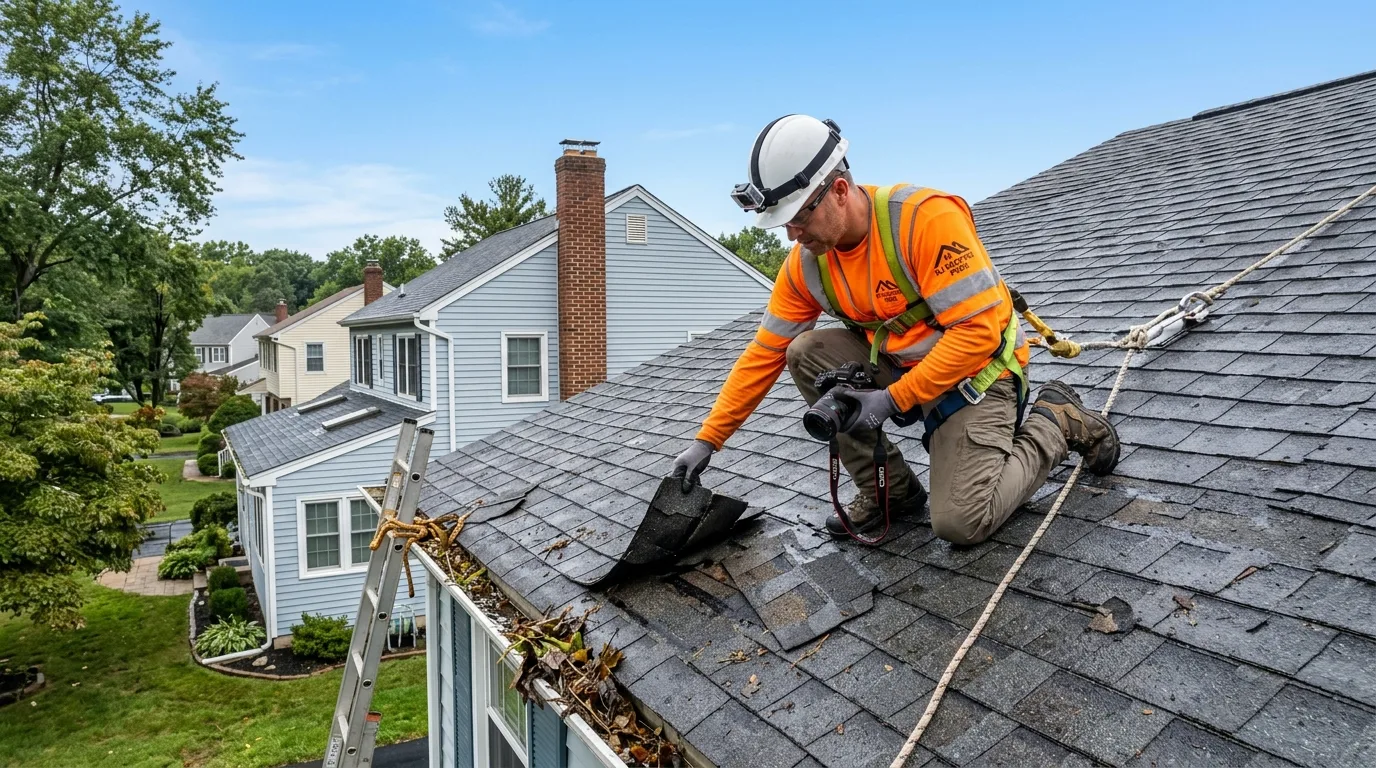
1. Fascia & Rafter Rot: When a 5-inch gutter overflows, surface tension draws water backward beneath the gutter lip, wetting the wooden fascia board and vinyl soffit framing. Over 2 to 3 seasons, this trapped moisture rots the wooden fascia and migrates up structural rafter tails, requiring costly structural carpentry. For diagnostic details, review our roof flashing and rafter repair guide.
2. Basement Flooding in Flood-Prone Basins: In communities like Bound Brook and Manville with high water tables, roof water pouring directly alongside exterior foundation footings saturates backfill soil, increasing hydrostatic pressure against cinder block walls and triggering wet basements and foundation heave.
3. Landscape Erosion & Walkway Heaving: Torrential overflow digs deep trenches into garden mulch, drowns delicate ornamental shrubs, and washes away sub-base aggregate beneath flagstone walkways and concrete driveways, creating tripping hazards and winter frost heaves.
The Downspout Equation: Upgrading to 3x4-Inch Leaders
A gutter is only as effective as its drainage exit. Standard 5-inch gutters typically use small 2x3-inch corrugated downspouts. A 2x3 downspout provides a cross-sectional drainage area of only 6 square inches. A single dry oak leaf or pine cone can wedge into the elbow, triggering an instant hydraulic blockade.
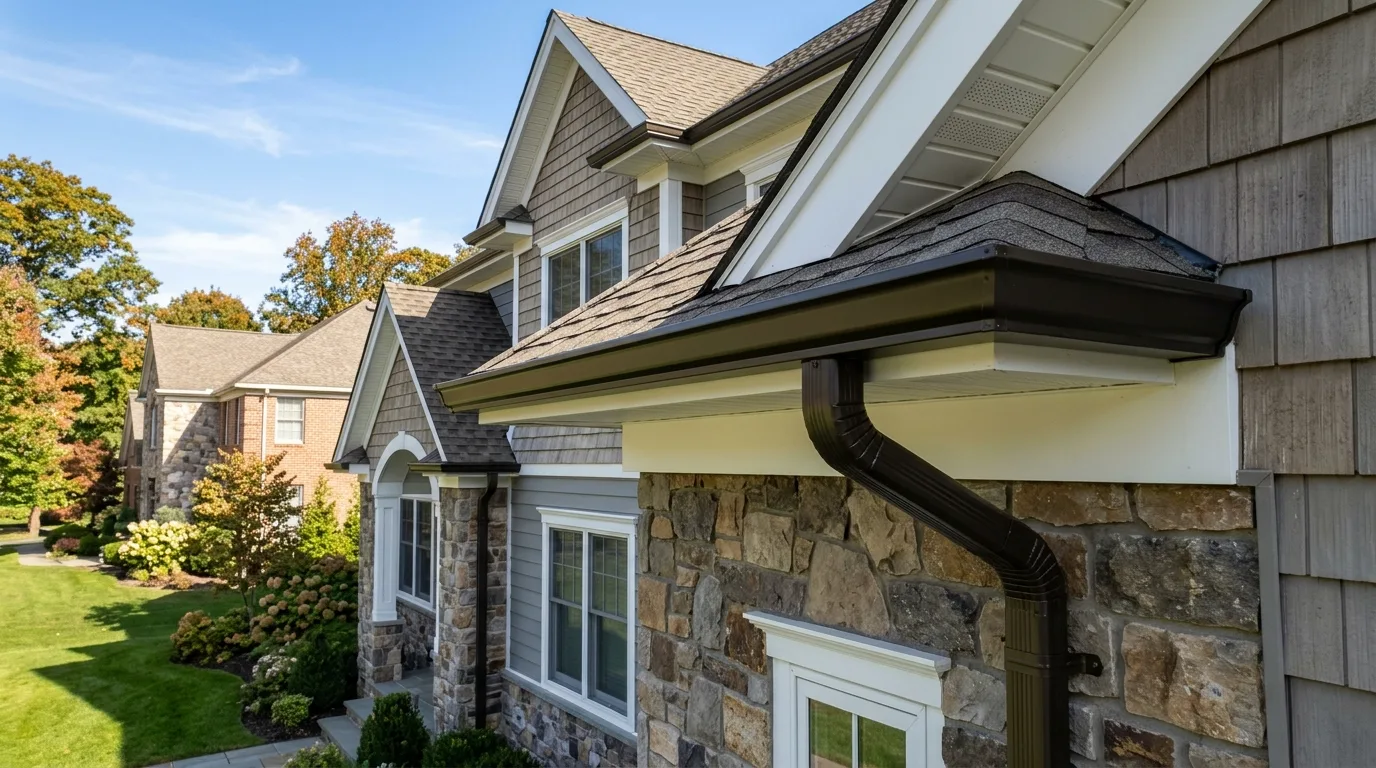
When you install custom 6-inch seamless gutters with Bridgewater Roofer, our crews automatically pair the system with commercial-grade 3x4-inch rectangular downspouts (providing 12 square inches of cross-sectional area). This literally doubles your evacuation capacity, allowing maple helicopters, pine needles, and large deciduous leaves to flush through cleanly without forming bottleneck dams.
Somerset County Tree Canopy Challenges: Town by Town
Central New Jersey boasts some of the most beautiful mature tree canopies in the state, but each regional community presents specific drainage challenges:
| Community Area | Dominant Tree Canopy Species | Recommended Gutter Configuration |
|---|---|---|
| Basking Ridge & Bedminster | Century-old White Oaks, Red Maples, and Sweetgum | 6-inch heavy-gauge seamless gutters with stainless steel micro-mesh guards to deflect dense autumn leaf drop. |
| Martinsville & Warren | Eastern White Pines, Hemlocks, and Mountain Laurels | 6-inch high-capacity troughs paired with 3x4-inch oversized downspouts to handle acidic pine needles and steep-slope runoff. |
| Hillsborough & Branchburg | Open suburban parcels, Pin Oaks, and ornamental Birch | 6-inch seamless aluminum gutters with reinforced hidden screw hangers spaced every 24 inches for wind resistance. |
| Somerville & Raritan | Historic street trees, Sycamores, and Norway Maples | Custom color-matched 6-inch K-style gutters designed to preserve architectural fascia profiles while maximizing outflow. |
Cost Comparison: 5-Inch vs. 6-Inch in Central New Jersey
Because seamless aluminum gutters are custom-extruded on-site from heavy-gauge coil stock on our mobile fabrication trucks, labor and setup costs are identical for both profiles:
| Gutter Specification | Standard 5-Inch Gutter | Oversized 6-Inch Gutter |
|---|---|---|
| Installed Cost per Linear Foot | $8.50 – $12.50 / ft | $11.00 – $15.50 / ft |
| Water Holding Capacity | Baseline (100%) | +44% to +50% greater volume |
| Downspout Size | 2x3 inches (Standard) | 3x4 inches (Double Drainage Area) |
| Aluminum Thickness | 0.027 inch (Standard) | 0.032 inch (Heavy Commercial Grade) |
| Typical Whole-Home Cost (160 ft) | $1,450 – $2,000 | $1,850 – $2,500 |
For an average Somerset County home, upgrading to heavy-gauge 6-inch gutters costs roughly $350 to $500 more overall—an insignificant sum compared to the thousands required to repair water-damaged basement drywall, install sump pumps, or replace rotted roof fascia boards. To price a complete exterior renovation, try our interactive Somerset County roofing cost calculator.
Gutter Guards & Winter Ice Performance
In heavily wooded neighborhoods across Somerset County, falling leaves quickly choke neglected troughs. We install heavy-gauge stainless steel micro-mesh leaf screens with internal aluminum support frames that prevent debris entry while allowing high-volume rain absorption.
During winter freezes, gutters also interact directly with roof meltwater. While gutters themselves do not cause ice dams, heavy-duty 0.032-gauge 6-inch gutters with hidden screw hangers secured into rafter ends can support heavy snow and icicle loads without ripping away from the home. For comprehensive winter defense, see our guide to ice dam prevention and attic ventilation in NJ.
If you are considering a full exterior upgrade, coordinating new seamless gutters simultaneously with a roof replacement or vinyl siding installation provides perfect drip edge flashing alignment and bundle savings. Explore our dedicated seamless gutter installation service or schedule a free roof and gutter evaluation today.
Need an Expert Assessment on Your Roof?
Talk directly with an experienced Somerset County field tech. 100% Free on-site inspection.
Frequently Asked Questions
No, modern 6-inch K-style seamless gutters blend seamlessly with residential architecture and often look superior to 5-inch troughs. Because they are custom-bent in matching colors (white, bronze, clay, black) and hug the fascia board with internal hidden hangers, they provide a substantial, architectural crown molding appearance.
Gutters do not cause or prevent ice dams, but 6-inch gutters accommodate winter meltwater and heavy snow loads far better than 5-inch gutters. We fabricate 6-inch gutters from heavy 0.032-gauge aluminum and space heavy-duty hidden screw hangers every 24 inches to prevent sagging under frozen snow weight.
Most complete residential seamless gutter and downspout replacements in Bridgewater and Somerset County are completed in a single morning or afternoon (3 to 5 hours). Our crews extrude the gutters on-site from our mobile fabrication truck to exact quarter-inch measurements.