Key Takeaways for Homeowners
- Realistic Shingle Lifespan: Standard architectural shingles last 22 to 28 years in Central New Jersey; basic 3-tab shingles fail after 12 to 16 years.
- The "Lifetime" Warranty Reality: Manufacturer lifetime warranties protect against factory defects, not natural weathering from UV exposure, humidity, and thermal aging.
- Standing Seam Longevity: 24-gauge standing seam metal roofs deliver 50 to 70+ years of maintenance-free service, easily surviving multiple generations of shingles.
- Attic Ventilation Impact: Poor ventilation can shorten an asphalt roof’s life by 30% to 40% by superheating the roof deck in summer and harboring condensation in winter.
- Inspection Milestone: Schedule a formal roof inspection once your roof reaches year 15 to catch seal failures before moisture rots structural plywood.
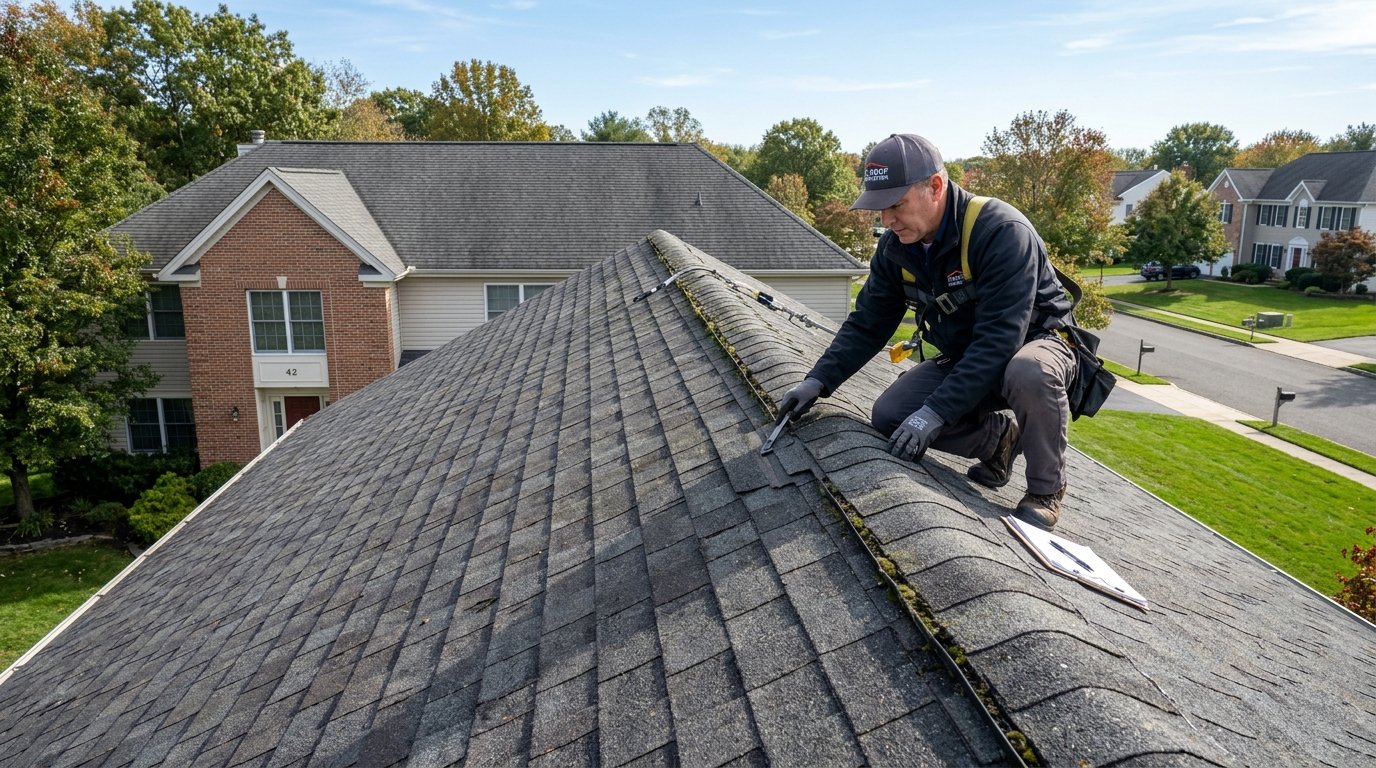
Quick Answer: Realistic Lifespans by Material
In New Jersey, realistic roof service life ranges from 12 years for basic 3-tab shingles to over 70 years for standing seam metal. The vast majority of single-family homes in Bridgewater, Basking Ridge, and Somerville have architectural asphalt shingles, which deliver 22 to 28 years of dependable protection when installed with proper intake and exhaust ventilation.
Lifespan by Roofing Material: Warranty vs. Reality
Manufacturer marketing often confuses homeowners with terms like "50-year warranty" or "Limited Lifetime." The table below provides realistic New Jersey field expectations versus manufacturer warranty claims:
| Roofing Material | Advertised Warranty | Realistic NJ Lifespan | Common Failure Mode in NJ |
|---|---|---|---|
| 3-Tab Asphalt Shingles | 20 – 25 Years | 12 – 16 Years | Tab blow-offs, thermal cracking, curling edges |
| Architectural Shingles (HDZ) | "Limited Lifetime" | 22 – 28 Years | Granule depletion, brittle fiberglass mat, nail pops |
| Designer / Luxury Shingles | "Limited Lifetime" | 30 – 38 Years | Weight fatigue, valley silt buildup, sealant breakdown |
| Standing Seam Metal Roof | 40 – 50 Years (Paint) | 50 – 70+ Years | Flashings around masonry, pipe boot gaskets (at 25 yrs) |
| Commercial EPDM Rubber | 15 – 20 Years | 18 – 25 Years | Lap seam adhesive failure, puncture tears from debris |
| Commercial TPO Membrane | 20 – 30 Years | 20 – 28 Years | UV embrittlement around un-ballasted perimeter edges |
| Natural Slate / Synthetic Tile | 50 – 100 Years | 75 – 100+ Years | Copper valley and copper nail corrosion before slate fails |
4 New Jersey Weather Factors That Accelerate Roof Aging
Roofs in New Jersey age substantially faster than identical roofs installed in mild, dry states. Here are the specific regional forces at work:
1. Winter Freeze-Thaw Cycles & Ice Dams
During January and February in Somerset County, temperatures frequently climb to 38°F during the afternoon and plummet to 18°F at night. Melting snow migrates beneath shingle tabs and into capillary joints. When this water freezes, it expands by approximately 9% in volume, physically prying shingle edges upward and cracking adhesive thermal bonds.
2. Summer Attic Heat & "Shingle Baking"
When outside ambient temperatures hit 92°F in July, an unventilated dark asphalt roof surface can reach temperatures upwards of 165°F. Attics without balanced airflow trap this heat, turning the underside of the roof into an oven. This extreme heat volatilizes the asphalt oils, drying out the shingles and causing surface blistering and rapid granule detachment.
3. Tree Canopy Shade and Algae Growth
In heavily wooded Somerset County communities such as Martinsville, Bernardsville, and Warren, mature oak and maple trees cast deep shade over north-facing roof slopes. Damp shingle surfaces harbor Gloeocapsa magma cyanobacteria (black streaks) and thick moss carpets. Moss acts like a wet sponge, holding water against the shingle base year-round and causing premature rot.
4. Nor'easter Wind Fatigue
Unlike occasional high-wind events, coastal nor'easters buffet Central Jersey with sustained 40 to 60 mph gusts for 24 to 48 consecutive hours. Over 15 to 20 years, this repetitive fluttering weakens the nail shanks and loosens the factory adhesive seal, making older shingles vulnerable to blow-offs.
Not Sure How Many Years Your Roof Has Left?
Schedule an in-depth 21-point roof health inspection. We evaluate shingle pliability, nail holding strength, attic ventilation, and decking condition to give you an honest lifespan estimate.
5 Proven Ways to Add 5 to 8 Years to Your Roof
Proactive maintenance substantially extends roof service life without costly early replacement:
Homeowner Maintenance Checklist:
- 1. Clean Gutters Every Spring & Fall: Clogged gutters back water up behind the fascia board and under the lower starter course of shingles, rotting roof rafter tails.
- 2. Trim Overhanging Tree Limbs: Keep branches at least 8 to 10 feet away from the roof line to allow morning sunlight to dry moisture, prevent animal access, and eliminate wind-scraped shingles.
- 3. Ensure Balanced 1:300 Attic Ventilation: Maintain equal continuous intake ventilation at the soffits and exhaust at the ridge vent to prevent extreme attic superheating and condensation. If powered attic exhaust fans or humidistat ventilators are installed, having a certified electrician test the thermostat wiring and motor circuits ensures proper thermal airflow during sweltering summer heatwaves.
- 4. Replace Plumbing Pipe Boots at Year 10–12: Neoprene rubber pipe boots dry-rot and crack within 10 to 12 years—well before the shingles fail. Replacing them prevents 80% of mystery ceiling leaks.
- 5. Clear Valley Leaves and Debris: Decaying leaves in roof valleys trap moisture and acidic tannins that degrade shingle granules prematurely.
Signs Your Roof Is Approaching Failure
When an asphalt shingle roof reaches the final 15% of its lifespan, it displays distinctive visual symptoms:
- Severe Granule Loss: Dark spots on shingles where the black asphalt substrate is visible, paired with heavy sediment in your gutters and downspout discharge.
- Cupping and Curling: Shingle edges curling upward like potato chips, indicating that volatile binding oils have completely evaporated.
- Brittle Shingles: Shingles snap or crack when gently lifted with a finger. In this state, shingles cannot be nailed or repaired without breaking adjacent tabs.
- Widespread Nail Pops: Rusty nails working their way upward through the shingle surface due to repetitive deck contraction.
- Spongy Decking: Roof sections that flex or feel soft underfoot when walked on by an inspector, signaling rotted plywood sheathing beneath.
Sources & Authoritative References
- National Roofing Contractors Association (NRCA): Roofing System Durability & Service Life Expectancies.
- Asphalt Roofing Manufacturers Association (ARMA): Ventilation Guidelines for Residential Asphalt Shingle Roof Systems.
- Oak Ridge National Laboratory (ORNL): Building Technologies Program — Solar Reflectivity and Roofing Thermal Aging.
- GAF Materials Corporation: Technical Bulletin on Environmental Factors and Shingle Life Expectancy.
- New Jersey Department of Environmental Protection (NJDEP): Climate Change in New Jersey: Temperature Projections & Severe Storm Frequency.
Dave Collins inspected and approved this guide on September 28, 2026, validating that all material benchmarks, ARMA ventilation standards, and NJ climate wear rates match current field inspection findings.
Frequently Asked Questions
While marketed with 'Lifetime' manufacturer limited warranties, architectural asphalt shingles in Central New Jersey realistically last between 22 and 28 years. Harsh winter freeze-thaw cycles, nor'easters, and 140°F summer attic heat cause asphalt oils to volatilize and dry out over two decades.
New Jersey experiences rapid temperature fluctuations where winter snow melts and refreezes into ice dams, lifting shingle edges. In summer, high humidity promotes moss and algae growth on shaded roof slopes, while severe windstorms cause fastener fatigue.
Yes. Balanced soffit intake and ridge exhaust ventilation can add 5 to 8 years to an asphalt shingle roof. Proper airflow prevents trapped attic heat from baking shingles from underneath and removes moist winter vapor that causes structural deck rot.
We recommend an annual professional roof inspection once your roof reaches 15 years of age. Catching deteriorating pipe boots, lifted flashing, and cracked sealant early prevents expensive interior leaks before replacement is needed.
A properly installed 24-gauge standing seam metal roof with a Kynar 500 fluoropolymer finish will last 50 to 70+ years in Central New Jersey, easily outlasting two to three shingle roofs.