Key Takeaways for Homeowners
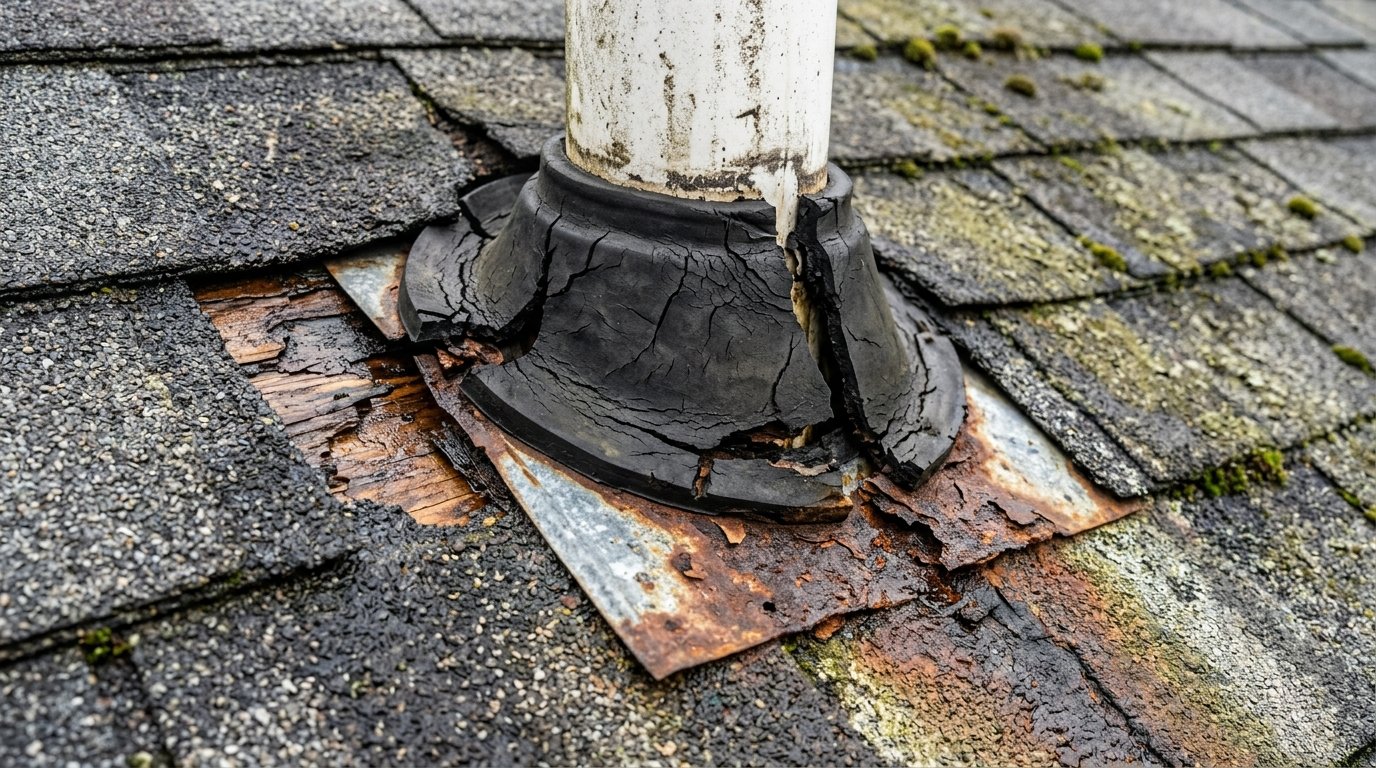
- Pipe Boot Collars #1 Culprit: Standard rubber neoprene plumbing vent collars dry rot and crack from UV radiation within 8 to 12 years, far earlier than asphalt shingles fail.
- Flashing Deterioration Accounts for 60%+ of Leaks: Wall intersections, chimneys, dormers, and valleys require precise metal step and counter-flashing. When caulking dries out, water enters behind walls.
- Winter Ice Dams: Thermal loss through poorly insulated attics melts roof snow, which refreezes at cold exterior eaves, forcing liquid water backwards beneath shingle laps.
- Nail Pops & Thermal Movement: Rapid seasonal temperature shifts in Somerset County cause roofing nails to back out of plywood decking, puncturing the overhead shingle tab.
- Hidden Water Travel: Water follows gravity along rafters, conduits, and ceiling joists, frequently dripping 15 to 25 feet away from the actual penetration point on the exterior roof.
The Top 10 Roof Leak Causes in Somerset County
Based on over 20 years of emergency service calls throughout Bridgewater, Basking Ridge, Somerville, and Hillsborough, here are the 10 most frequent structural culprits:
| Leak Source | Primary Mechanism | Typical Fix |
|---|---|---|
| 1. Plumbing Vent Pipe Boots | Neoprene gasket rots & cracks from UV | Install new silicone or lead flashing boot |
| 2. Chimney Counter-Flashing | Mortar joint seal separates from masonry | Grind mortar, re-tuck copper flashing, polyurethane sealant |
| 3. Valley Flashing Failure | Debris accumulation & rusted metal seams | Clear valley, install self-adhering ice shield, re-shingle |
| 4. Winter Ice Dams | Attic heat melt refreezes at eave gutter | Steam removal, attic air sealing, R-49+ insulation |
| 5. Wind-Lifted Shingles | Adhesive seal strips tear during nor’easters | Replace damaged shingles, apply hand-tabbed mastic |
| 6. Backed-Out Roofing Nails | Decking thermal expansion pops nails upward | Extract popped nail, seal hole, set new ring-shank nail |
| 7. Skylight Perimeter Seals | Aged rubber gaskets & clogged weep holes | Re-flash curb with ice barrier, replace outer gasket |
| 8. Step Flashing at Wall Dormers | Missing kickout flashing diverts water into siding | Retrofit aluminum kickout diverter, re-step flash |
| 9. Clogged Gutters Overflowing | Water pools behind fascia and rots soffit boards | Clear downspouts, install gutter guards, repair fascia |
| 10. Aged, Brittle Asphalt | Volatilization of oils creates hairline micro-cracks | Full architectural shingle system replacement |
Pipe Boots & Flashing Vulnerabilities: Where 75% of Leaks Begin
Homeowners frequently believe that shingles are the primary line of defense. However, any spot where a vertical object pierces the horizontal roof plane—such as exhaust vents, chimneys, soil pipes, and skylights—requires mechanical metal flashing.
The Danger of Builder-Grade Rubber Boots: New construction homes often utilize cheap plastic-base pipe collars with thin neoprene gaskets. After 7 to 10 summers of direct sun exposure, the neoprene loses elasticity, shrinks, and develops deep fractures. When rain hits the vent pipe, water streams directly down the outside of the PVC pipe into your ceiling insulation.
Where a sloped roof plane meets a vertical sidewall that continues past the gutter line, a specialized angled piece of metal called a kickout diverter must be installed. Without it, gallons of runoff pour directly behind the home's vinyl or cedar siding, rotting exterior wall sheathing without showing any visible roof leak.
Suspect a Leak in Your Somerset County Home?
Don't wait for your ceiling to collapse. Our leak detection experts locate the root cause in minutes.
Ice Dams & New Jersey Winter Weather
In Central New Jersey, January and February frequently bring back-to-back blizzards followed by cold sunny days. This creates the textbook conditions for ice dams:
1. Heat escapes from your living space into an under-insulated attic space.
2. The warm roof deck melts the underside of the snow pack on the upper slopes.
3. Meltwater flows downward until it reaches the unheated roof eaves and gutters (which remain below 32°F).
4. The water refreezes into a thick barrier ridge of solid ice.
5. Subsequent meltwater backs up behind the ice dam, creating a standing pool that forces liquid backwards under asphalt shingle laps and directly into exterior walls.
The Solution: Installing a continuous membrane of self-adhering ice & water shield at least 6 feet up from the eaves, coupled with balanced soffit-to-ridge attic ventilation and R-49+ attic floor insulation to keep the roof deck cold.
How to Detect Leaks in the Attic: The Roofer's Forensic Method
Because water follows gravity along roof trusses, finding the exterior source requires inspecting the attic from beneath:
-
Look for Black "Matted" Insulation: Water compacts fiberglass insulation, turning yellow batting into dark grey, matted clumps.
-
Examine Roofing Nails for Rust or Frost: Shiner nails that missed the rafter will sweat and frost over in winter if warm humid air enters the attic.
-
Trace Water Stains Upward: Water stains on rafters angle upward toward the real entry point—often 10 feet higher than the wet ceiling below.
Permanent Repair Solutions vs. Temporary Caulking Patches
Unlicensed handymen often slather roofing tar or clear silicone caulk over visible cracks. While this may hold for a few weeks, roofing tar cracks under summer heat and shrinks in winter freezes, trapping water inside the decking.
The Professional Standard: Bridgewater Roofer replaces the underlying metal flashing, replaces saturated underlayment with high-temp synthetic ice barrier, and secures new matching dimensional shingles with hot-dipped galvanized roofing fasteners. We provide a written warranty on all leak repairs.
Frequently Asked Questions
When rain falls vertically, gravity carries it safely over shingles. However, winds exceeding 40 mph blow water horizontally or uphill, forcing droplets underneath loosened shingle edges, into unsealed gable vents, or behind improperly step-flashed siding.
Standard rubber neoprene boots last between 8 and 12 years under intense solar UV and seasonal freeze-thaw cycles. We recommend upgrading to lifetime silicone or lead collars during any roof repair to prevent sudden attic leaks.
Yes. Water can leak slowly into fiberglass or cellulose attic insulation for weeks or months before saturating drywall enough to show a brown ceiling spot. During this time, hidden black mold and wood rot can silently develop on roof rafters and joists.
Extremely dangerous. Wet asphalt shingles and algae slicks have near-zero traction, and walking on saturated decking risks stepping through rotted plywood. Always call a licensed, OSHA-compliant roofing contractor with proper fall protection harnesses.
We offer 24/7 emergency dispatch across Bridgewater and Somerset County. Our rapid-response teams arrive fully equipped with heavy-duty tarps, waterproof sealants, and replacement shingles to halt active water infiltration within hours.