Key Takeaways for Homeowners
- Living Bacteria: Black roof streaks are caused by Gloeocapsa magma, an airborne cyanobacteria that feeds on calcium carbonate limestone filler inside modern shingles.
- Never Pressure Wash: High-pressure washing strips away the ceramic protective granules, destroying the shingle’s waterproof core and immediately voiding manufacturer warranties.
- Moss Lifts Shingles: Unlike surface algae, thick green moss grows root-like structures (rhizoids) that pry up shingle edges, allowing winter rain and ice to seep beneath.
- ARMA Standard Soft-Washing: The Asphalt Roofing Manufacturers Association specifies a low-pressure chemical application (under 60 PSI) of sodium hypochlorite and surfactant to kill spores at the root.
- Zinc / Copper Prevention: Installing zinc or copper strips along the roof ridge releases microscopic metal ions during rainfall that permanently prevent algae colonies.
What Causes the Dark Streaks Across New Jersey Roofs?
Drive through shaded residential neighborhoods in Martinsville, Basking Ridge, Warren, or Bernardsville, and you will notice prominent dark, vertical stains running down the North and Northwest roof slopes of almost every second home.
These streaks are not soot, tree sap, mildew, or atmospheric chimney dirt. They are active colonies of an ancient, airborne cyanobacteria known as Gloeocapsa magma. To keep modern asphalt shingles structurally dense and fire-resistant, manufacturers blend asphalt with finely pulverized limestone filler (calcium carbonate).
Gloeocapsa magma feeds voraciously on this calcium carbonate. To shield its cellular structures from harsh solar ultraviolet rays, the bacteria secretes a dark, pigmented outer sheath. Over several seasons, millions of microscopic cellular sheaths coalesce into the conspicuous black streaks visible from the street, dulling your curb appeal and absorbing intense solar heat that raises cooling utility bills.
Algae vs. Moss: Why Moss Poses an Immediate Structural Threat
While black algae streaks are primarily an aesthetic and thermal reflection concern (darkened shingles absorb excessive solar radiation, accelerating attic thermal heat build-up), green moss and lichen are active structural hazards that permanently destroy shingle integrity:
-
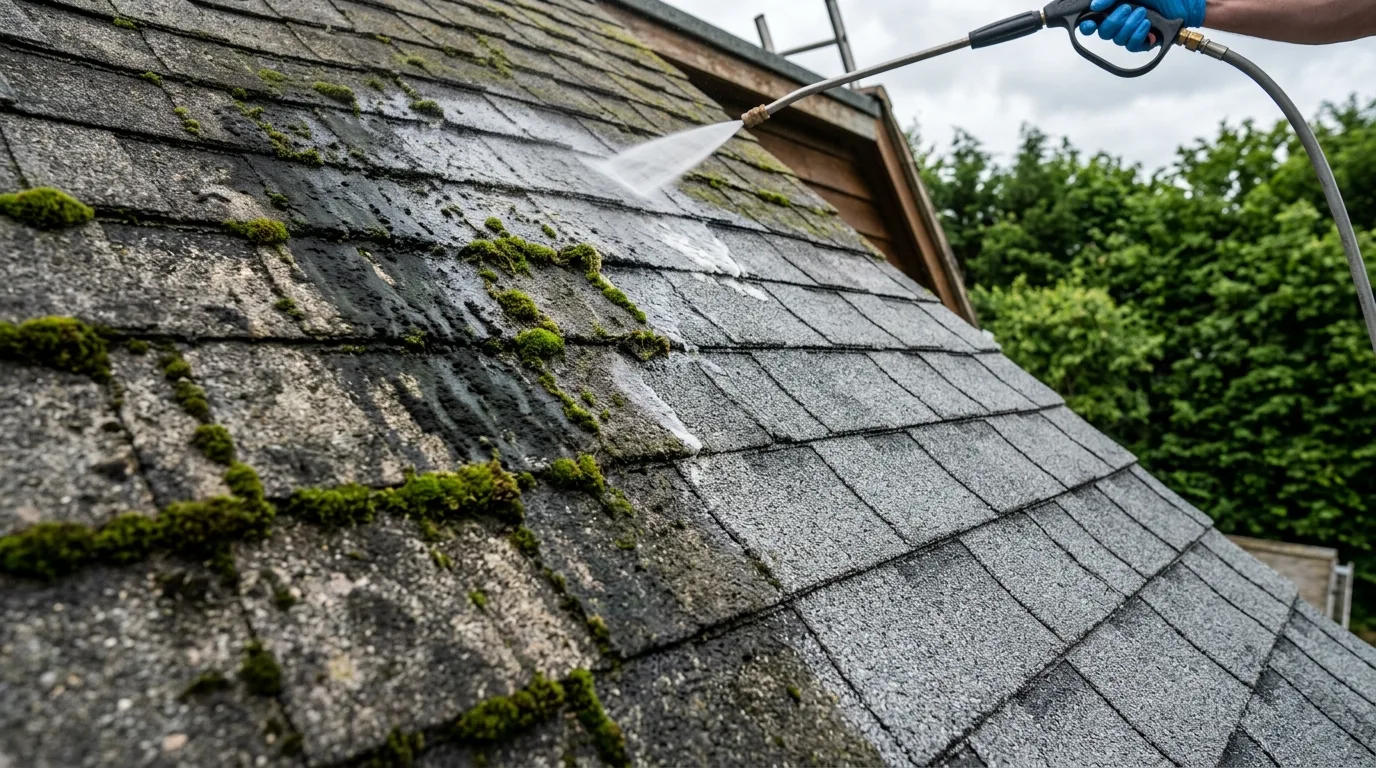
Prying Shingle Tabs Upward: Moss clusters develop dense root-like anchoring filaments (rhizoids) that work their way between overlapping shingle courses, breaking the factory thermal adhesive seal and exposing the roof to wind blow-offs.
-
Spongy Moisture Retention: Living moss absorbs up to 20 times its dry weight in water. This perpetual dampness rots asphalt granules, degrades the fiberglass reinforcing mat, and decays the underlying plywood decking.
-
Winter Freeze-Thaw Fractures: Moisture trapped inside moss expands as it freezes beneath winter temperatures, fracturing the ceramic granule bond and causing premature bald spots across your shingles.
-
Gutter & Drainage Clumping: Dislodged clumps of moss and decaying organic silt wash downward, creating dense blockages in gutters and downspouts. See our guide comparing 5-inch vs 6-inch seamless gutters to manage heavy organic runoff.
Why You Must NEVER Pressure Wash Asphalt Shingles
Hiring an inexperienced handyman or power-washing company wielding a 3,000 PSI wand will permanently destroy an asphalt roof in under 60 minutes. High-pressure water blasts strip away the protective ceramic mineral granules that shield your home from ultraviolet radiation and exterior fire hazards. Once these granules are eroded, the fragile asphalt core dries, curls, and cracks, reducing your roof's remaining lifespan by 10 to 15 years and instantly voiding manufacturer warranties from GAF, CertainTeed, and Owens Corning.
The ARMA-Approved Soft Wash Method
The Asphalt Roofing Manufacturers Association (ARMA) specifies a gentle, chemical-based soft-wash protocol using low pressure (strictly under 60 PSI, equivalent to standard garden-hose flow):
- Comprehensive Landscape Protection: Thoroughly pre-wetting and draping chemical-resistant plastic tarps over all foundation shrubs, ornamental trees, and flower beds surrounding the home.
- Bio-Algicidal Formulation: Applying a manufacturer-approved solution of sodium hypochlorite, professional surfactants, and water. The surfactant clings to steep pitches, allowing the solution to break down organic cell membranes and eradicate spore roots.
- Controlled Dwell Period: Allowing the active algicide to dwell for 15 to 20 minutes to neutralize biological growth without manual wire-brushing or granule-abrasive scrubbing.
- Gentle Low-Pressure Rinse: Rinsing with high-volume, gentle water that washes away neutralized algae and lichen while leaving protective shingle granules completely undisturbed.
Somerset County Tree Canopy & Moisture Hotspots
Algae and moss proliferation is heavily dictated by regional tree coverage, terrain elevation, and moisture retention. Neighborhoods across Somerset County present varying biological risk profiles:
| Community Area | Environmental Conditions | Biological Growth Risk Profile |
|---|---|---|
| Basking Ridge & Bedminster | Mature oak and maple forest canopies, extensive northern roof shading, low sunlight penetration. | Extreme moss and lichen growth requiring preventative zinc strips and periodic biocide washes. |
| Martinsville & Warren | Watchung Mountain ridge cloud cover, morning dew retention, and dense pine needle accumulation. | Accelerated black algae streaking on northwest roof planes; acidic needle decay promoting moss beds. |
| Bound Brook & Manville | River valley humidity, ground fog inversions, and high summer dew points. | Persistent Gloeocapsa magma black streaking across open suburban single-story ranch roofs. |
| Somerville & Raritan | Historic residential properties with steep multi-gabled roof configurations and decorative dormers. | Valley moisture collection behind dormers promoting localized moss growth and flashing corrosion. |
| Hillsborough & Branchburg | Large residential lots with alternating full-sun south slopes and heavily shaded north slopes. | Thermal differentiation where shaded slopes degrade prematurely compared to southern exposures. |
The Insurance Drone Threat: Why Algae Triggers Cancellation
In recent years, black algae streaks and green moss clusters have become a leading catalyst for unexpected homeowners insurance non-renewal notices across New Jersey. Major carriers deploy autonomous drones and high-resolution aerial satellites to audit policyholders.
Underwriting software algorithms flag dark organic staining as evidence of moisture retention, advanced shingle wear, or deferred maintenance. If your carrier flags your property, you may be given a strict 30-day mandate to professionally remediate the growth or replace the roof entirely. Learn how to protect your policy in our in-depth report on NJ homeowners insurance roof age and non-renewal policies.
Permanent Prevention: Algae-Resistant Shingles & Zinc Strips
Once your roof is clean—or when planning a future roof replacement in Bridgewater, NJ—you can eliminate biological growth permanently through modern material science:
1. Copper-Infused Shingles (GAF StainGuard Plus & CertainTeed StreakFighter): Modern premium shingles feature ceramic granules embedded with specially formulated copper microspheres. Over decades of rainfall, these granules release a controlled, steady concentration of copper ions that continuously inhibit cyanobacteria colonization, supported by 25-to-30-year manufacturer algae warranties.
2. Continuous Zinc or Copper Ridge Strips: For existing roofs with good structural life, installing continuous 2.5-inch zinc or copper flashing strips directly beneath the ridge cap shingles provides long-term biological defense. As rainwater washes over the metallic strips, it carries natural fungicidal ions across both slopes.
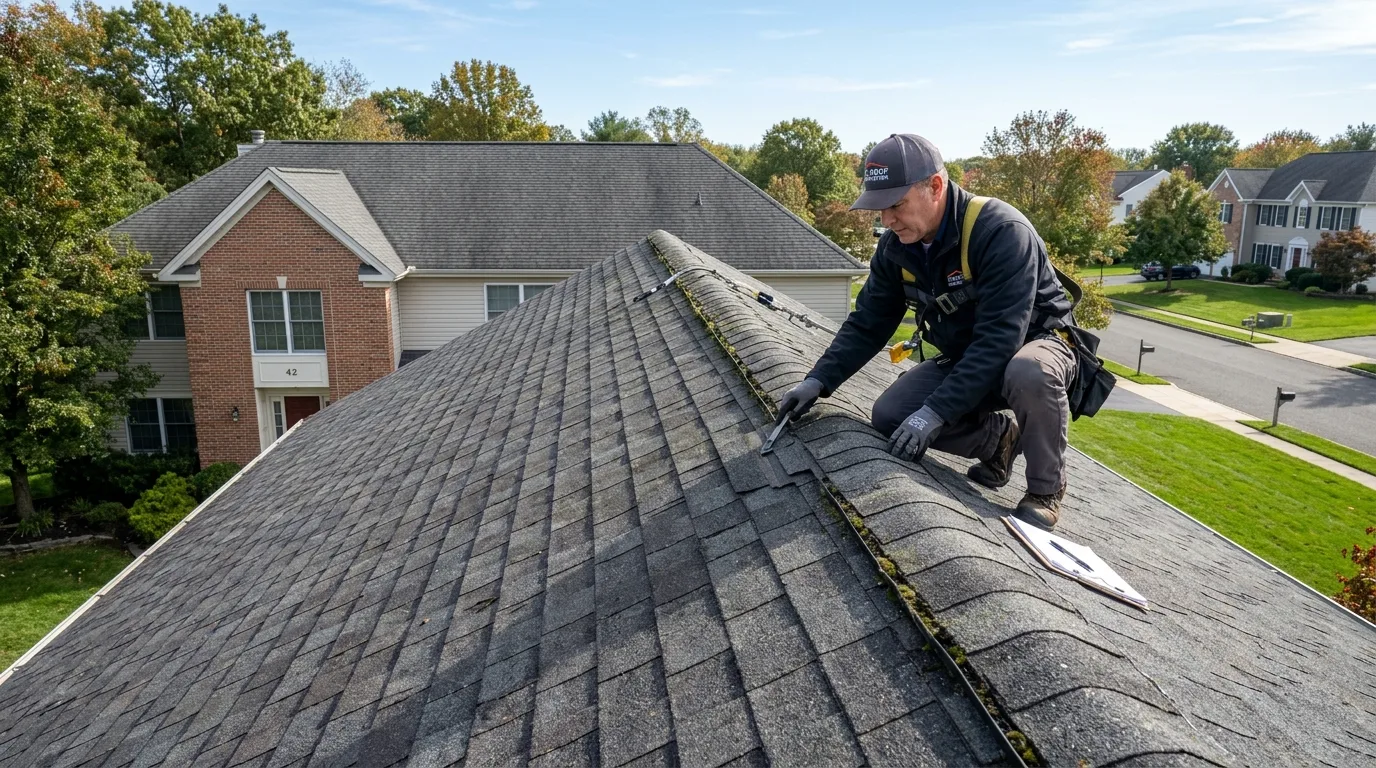
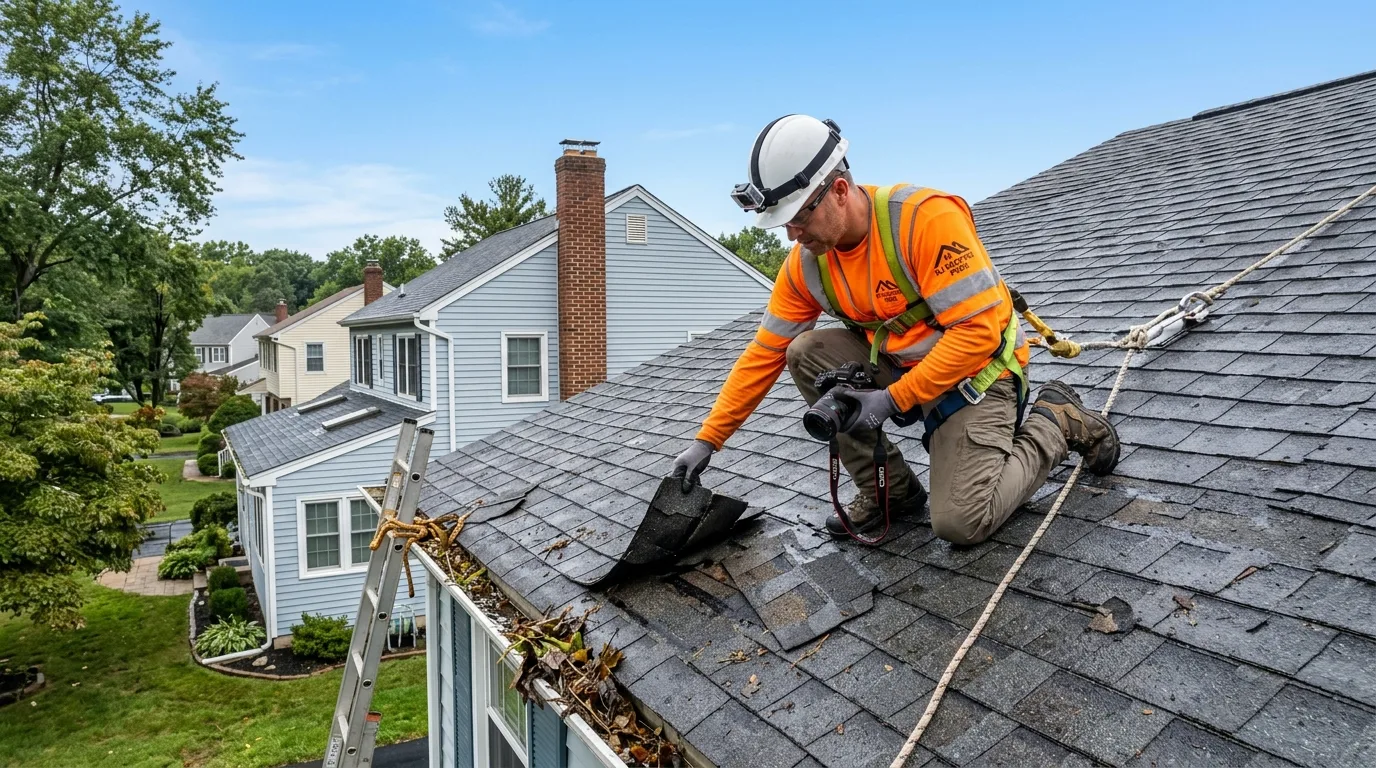
If your roof shows signs of curling tabs, granule loss, or recurring leaks alongside moss growth, scheduling a certified roof inspection is the safest first step. Contact Bridgewater Roofer today at (908) 465-9944 or estimate your project with our Somerset County roofing cost calculator.
Need an Expert Assessment on Your Roof?
Talk directly with an experienced Somerset County field tech. 100% Free on-site inspection.
Frequently Asked Questions
Yes, severe moss growth is currently one of the leading triggers for insurance non-renewal notices in Somerset County. Underwriters inspecting drone imagery flag heavy moss as proof of poor maintenance and moisture retention, demanding professional treatment or roof replacement.
A professional soft wash treatment typically keeps shingles algae-free for 3 to 5 years in Central New Jersey. Installing zinc or copper ridge strips extends this protection indefinitely by releasing continuous anti-microbial ions.
Yes, provided the underlying shingles remain pliable and undamaged, professional soft washing will safely kill and detach moss without shingle damage. However, if moss has grown unchecked for years and caused curled, rotted edges, targeted shingle repairs or replacement will be necessary.