Key Takeaways for Homeowners
- Thermal Bridging Defense: Insulated vinyl siding adds R-2.5 to R-3.5 continuous exterior insulation over your home’s wall studs, reducing winter heating bills by 8–14%.
- Impact Resistance: Foam-backed insulated siding resists baseball impacts, falling tree branches, and heavy hail 300% better than hollow builder-grade vinyl.
- Fiber Cement Strengths: James Hardie fiber cement delivers supreme fire resistance and deep woodgrain aesthetics, but carries higher labor costs and requires periodic painting.
- Critical Step Flashing: Siding where dormers meet roof slopes must feature aluminum kickout diverters to prevent water from running behind exterior walls.
- ROI: Quality siding replacement consistently returns 68% to 78% of its installed cost in New Jersey home resale assessments.
The Three Main Siding Materials for New Jersey Homes
Selecting exterior siding in Central New Jersey involves balancing upfront budget, aesthetic curb appeal, energy efficiency, and long-term resistance to severe weather patterns. Whether your home is located along the windswept ridges of Martinsville or in the historic tree-lined avenues of Somerville, your exterior cladding is the primary weather shield protecting your wall studs and interior drywall:
- Traditional Hollow Vinyl Siding: The most budget-friendly exterior cladding. Manufactured from extruded polyvinyl chloride (PVC) resin, standard vinyl is impervious to moisture rot, termite infestation, and never requires painting. However, because it hangs loosely from nail slots without backing, hollow vinyl can sound hollow in brisk winds, warp if improperly fastened, and crack when struck by hail or stray baseballs during freezing winter weather.
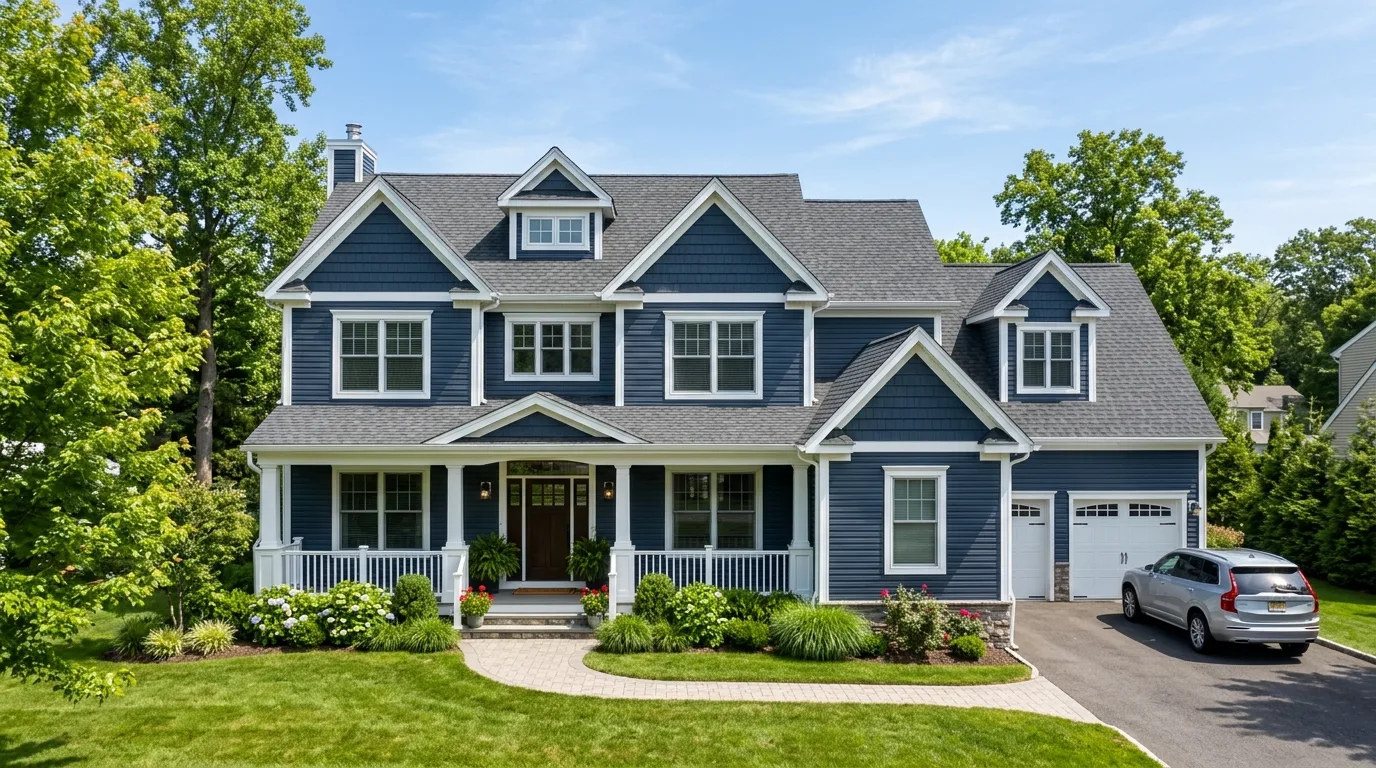
- Contoured Insulated Vinyl Siding: High-grade exterior vinyl fused permanently to custom-molded, contoured expanded polystyrene (EPS) foam backing. The rigid foam core supports the vinyl panel from behind, eliminating rattling, bridging wall-stud thermal gaps, and creating the dense, authentic shadow lines of real painted cedar clapboard.
- Fiber Cement Siding (James Hardie): Engineered from a pressurized mixture of Portland cement, fine sand, and cellulose fibers. Fiber cement delivers non-combustible Class-A fire resistance, impenetrable wood-boring pest protection, and superior architectural elegance, but requires specialized diamond-blade cutting equipment, heavier structural wall framing, and periodic factory-finish repainting every 12 to 15 years.
Thermal Performance & R-Value in Somerset County Winters
In typical New Jersey suburban homes built between 1960 and 2000 across Bridgewater, Branchburg, and Hillsborough, exterior walls are insulated with fiberglass batt insulation stuffed between 2x4 or 2x6 wooden studs. However, solid wood studs account for roughly 25% of your exterior wall surface area. Because wood conducts thermal energy rapidly, outside winter freezing temperatures bypass wall cavity insulation directly through the wooden studs—a building science phenomenon known as thermal bridging.
Standard hollow vinyl provides negligible insulating value (typically R-0.6). In contrast, contoured insulated siding wraps your home's entire exterior in a continuous thermal blanket, adding R-2.5 to R-3.5 continuous insulation directly over the exterior sheathing. This continuous foam jacket blocks thermal bridging, eliminates cold wall drafts in split-level homes, and yields verifiable 8% to 14% reductions in annual winter heating and summer cooling utility costs.
Acoustic Dampening: Quieting Highway & Street Noise
Beyond thermal resistance, insulated siding provides an unexpected lifestyle upgrade: substantial acoustic noise dampening. For homes positioned near busy Central New Jersey transit corridors—such as Route 22, Route 202/206, Route 28, and I-287—the rigid closed-cell EPS foam core acts as an effective sound-deadening acoustic barrier. Insulated vinyl siding reduces external acoustic sound transmission by up to 4.5 decibels (roughly a 35% reduction in perceived exterior traffic noise) compared to thin, reverberant hollow vinyl panels.
Wind & Impact Resistance: Nor'easters and Severe Hail
Elevated residential parcels in Warren, Martinsville, and Basking Ridge routinely endure 55 to 75 MPH wind gusts during autumn tropical depressions and winter nor'easters. When high wind sweeps across hollow vinyl, negative pressure suction can pop loose the interlocking seams, causing loose panels to flutter loudly, bend, or tear completely free from the wall.
Premium insulated vinyl features an engineered double-thick folded nail hem and extra-deep panel lock channels. Because the dense EPS foam backing eliminates the hollow void behind the face of the panel, it provides continuous resistance against positive and negative wind pressures, earning category-5 wind load certifications rated for up to 160 MPH wind shears.
Furthermore, insulated siding delivers 300% greater impact resistance than hollow vinyl. Flying tree branches, windblown hail, or accidental lawnmower gravel strikes bounce harmlessly off the foam-supported surface rather than punching gaping holes through brittle plastic.
Somerset County Neighborhood Architectural Styles
Matching exterior cladding to regional Somerset County home styles ensures maximum aesthetic harmony and property resale equity:
| Community Area | Dominant Architecture | Recommended Siding Configuration |
|---|---|---|
| Basking Ridge & Bedminster | Colonial Revival, Georgian estates, and custom equestrian properties. | Wide 7-inch Dutch Lap insulated vinyl or James Hardie fiber cement in rich historic earth tones with wide architectural corner posts. |
| Somerville & Raritan | Historic Victorians, Craftsman bungalows, and decorative Queen Anne gables. | Contoured insulated cedar-grain lap siding paired with vertical Board & Batten accents and decorative scalloped shake gables. |
| Martinsville & Warren | High-elevation contemporary estates, multi-level split ranches, and transitional designs. | Heavy-gauge insulated siding engineered with 160 MPH wind ratings and high-temperature UV color pigments. |
| Bound Brook & Manville | Cape Cods, compact suburban ranches, and river basin properties. | Closed-cell insulated vinyl with breathable water-resistive house wraps (WRB) to resist flood-zone humidity and moisture. |
| Hillsborough & Branchburg | Large split-levels, center-hall colonials, and open suburban developments. | D-4 or D-5 contoured insulated panels delivering continuous R-3.0 thermal bridging defense across expansive exterior walls. |
Somerset County Siding Cost & Resale ROI
Exterior siding replacements in Central New Jersey offer some of the highest return-on-investment metrics in home remodeling:
| Siding Material | Cost per Square Foot (Installed) | Typical 2,200 Sq Ft Home | Expected Lifespan | Resale Value Recouped |
|---|---|---|---|---|
| Standard Hollow Vinyl | $7.50 – $11.50 / sq ft | $12,000 – $18,500 | 20 – 30 years | 68% – 72% |
| Contoured Insulated Vinyl | $10.50 – $15.50 / sq ft | $17,500 – $25,500 | 35 – 50 years | 74% – 82% |
| James Hardie Fiber Cement | $14.50 – $21.00 / sq ft | $24,000 – $36,000 | 40 – 50+ years | 75% – 85% |
While insulated siding carries a 25% to 35% material premium over hollow builder-grade vinyl, the energy savings alone typically recoup this differential within 5 to 7 years. Calculate full exterior budgets using our interactive Somerset County roofing and exterior cost calculator.
Siding-to-Roofline Intersections: Preventing Concealed Leaks
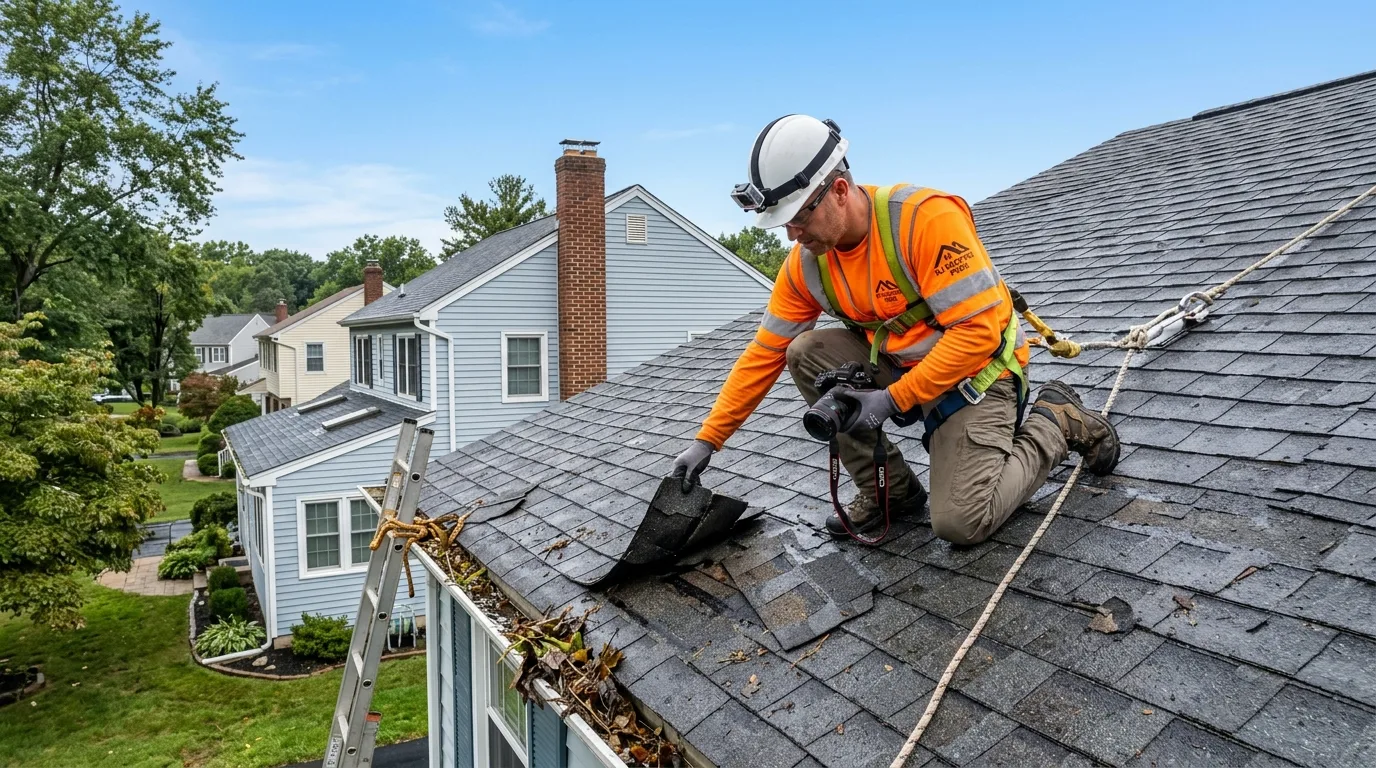
As experienced exterior specialists, Bridgewater Roofer frequently repairs severe structural rafter rot triggered by improper siding work. Where exterior wall siding intersects a sloped roofline (such as sidewalls, dormers, or split-level garage roof transitions), building code and manufacturer installation manuals mandate two critical waterproofing details:
1. The 1.5-Inch Clearance Gap: Siding panels and corner J-channels must maintain a strict 1.5-inch vertical gap above the finished shingle surface. If siding installers run vinyl or fiber cement tight against shingles, capillary action wicks moisture upward into the wall sheathing, rotting wooden studs and inviting carpenter ant infestations.
2. Mandatory Kick-Out Flashing Diverters: At the lower terminus of every roof-wall intersection, an oversized, pre-formed aluminum kick-out flashing diverter must be woven beneath the lowest step flashing card. Kick-out flashing diverts water running down the roof sidewall outward into the seamless gutter system. Omitting kick-out diverters directs hundreds of gallons of concentrated roof runoff straight behind the siding, rotting interior drywall and sill plates.
If you are planning a comprehensive home exterior upgrade, pairing a roof replacement with new insulated vinyl siding allows our certified crews to install brand-new continuous step flashing, ice barrier membranes, and seamless trim details simultaneously. Schedule your free exterior consultation or call our Bridgewater office at (908) 465-9944.
Need an Expert Assessment on Your Roof?
Talk directly with an experienced Somerset County field tech. 100% Free on-site inspection.
Frequently Asked Questions
Yes, independent tests by the Department of Energy demonstrate that contoured insulated vinyl siding reduces exterior thermal bridging, cutting utility costs by 8% to 14% annually. By creating a continuous insulation envelope over exterior wall framing, it eliminates winter wall drafts and summer heat conduction.
Yes, individual damaged vinyl siding panels can be unzipped using a specialized siding zipper tool and replaced without re-siding the entire house. However, because UV sunlight fades siding color over time, new replacement panels may show minor shade differences unless sourced from an unexposed wall section.
Yes, coordinating roofing and siding replacements together ensures flawless integration of step flashing, house wrap, and corner trims. It also provides unified project management, shared dumpster logistics, and package warranty protection.